
Insights into the information flow between the Woluwe APEEE Board and the parents.
Preliminary note: Thanks to our kids, many of you must be familiar with Harry Potter and the Hogwarts Castle’s chamber of secrets (actually, at The Woluwe Diaries HQ we love it too 😊). As in the Harry Potter stories, some fiction is likely to have slipped in into this post as some facts cannot be verified – if only we had some Veritaserum or Polyjuice… but, as in Harry Potter, we believe the end of this regime is near even if only in one’s last school year…
Like at the Hogwarts School of Witchcraft and Wizardry, word has it that our APEEE has its own version of a chamber of secrets, and while we don’t know if there is an awful monster hiding in it or not 😊, it seems that amongst the APEEE Board members we might have pure blood wizards and muggle-born wizards, depending on which linguist section one belongs, and to which higher power one swears allegiance to. It’s funny when apparent reality appears to follow fiction, right? And let’s not even start talking about He Who Must Not Be Named…
These differences in treatment are what we have noticed as parents in at least two different linguist sections. When information relevant to all should have arrived to all parents simultaneously, we often hear that it reaches certain sections first. But let’s of course give due credit to the Woluwe Info, the flashy newsletter of the APEEE that offers a lot of nice information on what the APEEE does like the greening of the buses etc. But does it really cover all subjects? We are not so sure about that…
Right now, when it comes to the access to information, even if all language sections are equal on paper, apparently some are more equal than others:
- Mamma mia, Italians seem to always be the first to know!
- Dutch cannot decide if they have information and, even if they have it, they cannot decide if they share it or not;
- Others, such as the Portuguese or the French, either do not even have information to share or are so scared of the spells of He Who Must Not Be Named that the preferred answer is I don’t know or How do YOU know about that?
- Germans seem to be close to the He Who Must Not Be Named and even organise regular meetings to brief everyone on latest developments but never questioning the system;
- The Swedes think they know everything. They are assured they know everything. But in fact, they probably know nothing;
- Apparently the Finns would like to know more;
- We know nothing about the Lithuanians apart from the fact that they exist;
- The English, uhm, they are polite and happy and they watch everything in silence with a tight upper lip. Whether they know what is going on or not, that is another question.
But seriously, we have indeed noticed a HUGE difference in the way information is shared amongst the different linguistic sections of EEB2 by their APEEE representatives. Let’s for instance consider the work performed in the CEPM (Educational Council for the primary and nursery). Neither the Portuguese nor the French primary representatives received the minutes for the meeting of April 20th, nor were they invited to provide input to the meeting of June 10th or even informed of this meeting. What happened at the CEPM meeting on June 10? Can all primary and nursery parents receive an update now that we have missed the deadline to contribute to this important meeting? Did someone from these sections even attend the meeting?
In a Europe where we are all united in diversity, it is very sad for us to observe and experience such a situation – we should be the example of what to do. And let’s not discriminate between pure blood wizards that follow He Who Must Not Be Named and the ones that do not, and please let’s not attack the muggle-borns as they are usually the most intelligent of the bunch!
Let’s invite the APEEE board to reflect and to organise for next year regular meetings with parents representatives of all language sections so as to avoid a two-speed sharing of information! Let’s open the chamber of secrets to everybody!
This article has been co-authored by Célia Rodrigues and Sabrina Fasoli
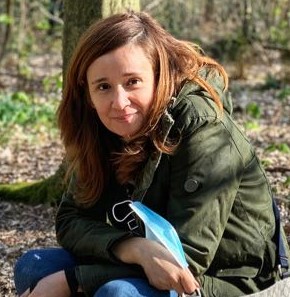
Célia Rodrigues is a parent at the Brussels European School 2 in Woluwe with a child attending the PT section.
She has the dream of having a parent’s organisation that consults and represents the parents in full transparency and uses her personal time to do her best to achieve it.